Stamped Concrete vs Pavers in Phoenix: Which Is Better for the Desert Climate?
If you’re planning a patio, driveway, walkway, or pool deck in Phoenix, two of the most popular choices are stamped concrete and pavers. Both offer great style and durability, but choosing the right option in the Arizona desert depends on a few key factors: heat, soil movement, maintenance, and cost.
This guide breaks down the pros and cons of stamped concrete vs pavers — specifically for Phoenix homeowners dealing with extreme heat, monsoons, and desert soil.
Read More About: Best Weather for Concrete Construction in Phoenix
How Arizona’s Weather Affects Outdoor Surfaces
Phoenix isn’t like other regions. Our weather includes:
- 100°–115°F summers
- Rapid temperature swings
- Monsoon storms and flash flooding
- Expansive desert soil and settling
These conditions can dry out concrete too fast, cause cracking, fade colors, or shift individual pavers if not installed correctly.
So, the right material isn’t just about looks — it’s about how well it holds up to Phoenix’s climate.
What Is Stamped Concrete?
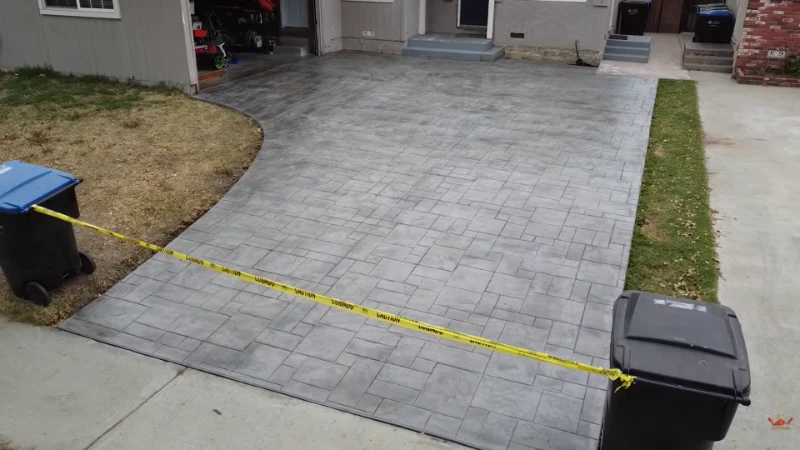
Stamped concrete is poured concrete that’s textured and colored to look like stone, tile, brick, or wood. It gives the appearance of natural materials but with a solid, continuous slab surface.
Pros of Stamped Concrete in Phoenix
Cost-effective compared to natural stone or high-end pavers
Beautiful designs with realistic stone textures
No weeds growing between joints
Strong and long-lasting when sealed properly
Cons
Can crack over time due to soil movement and heat
Color may fade faster under UV exposure without sealing
Repairs are noticeable — patchwork rarely blends perfectly
Best Uses
- Patios
- Pool decks
- Walkways
- Decorative outdoor entertaining areas
What Are Pavers?
Pavers are individual concrete or stone pieces installed over a compacted base. Unlike one solid slab, the surface has small expansion joints, allowing movement.
Pros of Pavers in Phoenix
Flexible system — better resistance to cracking
Easy repairs (replace one piece instead of the whole slab)
Stay cooler than stamped concrete in summer
Resistant to fading when using high-quality sealed pavers
Cons
Typically more expensive upfront
Weeds or sand may appear in joints if not sealed
Some pavers may shift if the installation base isn’t compacted properly
Best Uses
- Driveways
- RV parking pads
- Patios and walkways
- High-traffic outdoor areas
Head-to-Head Comparison for Phoenix Climate
| Feature | Stamped Concrete | Pavers |
| Heat Resistance | Can get hot | Stays cooler |
| Cracking Risk | Higher (single slab) | Low (individual pieces) |
| Maintenance | Needs sealing every 2–3 years | Optional sealing, low upkeep |
| Repairability | Hard to match color/texture | Easy — replace individual stones |
| Cost | More affordable | Higher upfront investment |
| Lifespan | 20–30+ years with care | 30–50+ years |
So… Which Is Better?
Both materials work well in Phoenix — the best choice depends on your priorities:
| If You Want… | Choose: |
| Lower upfront cost | Stamped Concrete |
| Maximum durability in heat and soil movement | Pavers |
| Highly customizable designs | Both |
| Easiest long-term maintenance | Pavers |
| Seamless look with realistic stone patterns | Stamped Concrete |
Maintenance Tips for the Phoenix Desert
No matter which material you choose, maintenance helps extend the life of your surface:
Seal the surface to protect from UV damage
Clean oil stains quickly — especially on driveways
Avoid de-icing salts (not common in Phoenix, but still important)
Refill joint sand for pavers when needed
Final Thoughts – Stamped Concrete vs Pavers
There’s no “wrong” choice — both stamped concrete and pavers can perform well in Phoenix when installed correctly. If you want a budget-friendly, decorative look, stamped concrete is a great option. If you’re focused on long-term durability, heat reduction, and easy repairs, pavers are worth the investment.
The right decision ultimately depends on your budget, style, and how you plan to use the space.