Best Concrete Options for RV Parking in Phoenix
If you own an RV in Phoenix, having a durable parking pad isn’t just about convenience — it’s about protecting your concrete from cracking under heavy weight and surviving the extreme Arizona climate. RVs weigh significantly more than regular vehicles, and Phoenix’s desert soil, UV exposure, and temperature swings mean the concrete must be installed correctly to last.
Read Also: Stamped Concrete vs Pavers
Why Standard Concrete Isn’t Always Enough
RVs can weigh anywhere from 6,000 to over 30,000 pounds, depending on the size and model. That means the concrete needs:
- Higher strength
- Reinforced support
- Proper thickness
- A stable base layer
If the concrete isn’t engineered properly, it may develop cracks, surface wear, or sinking—especially during monsoon season when soil shifts or becomes saturated.
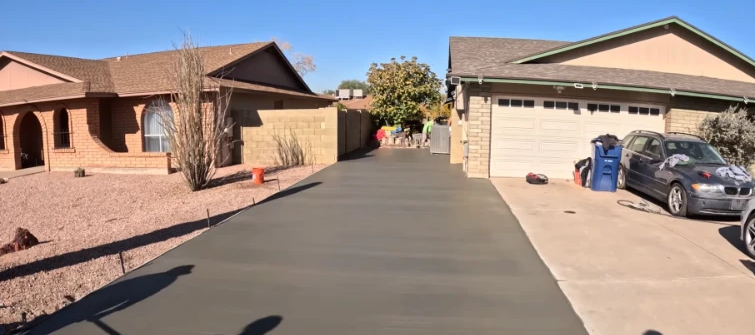
Recommended Concrete Specifications for RV Parking in Phoenix
To build a long-lasting RV parking pad, most Phoenix contractors recommend:
- Thickness: 5–6 inches minimum (6–8 inches for heavier rigs or full-time parking)
- PSI Strength: At least 4,000 PSI
- Reinforcement Options:
- Rebar grid
- Welded wire mesh
- Fiber-reinforced concrete (or a combination)
- Rebar grid
These upgrades help the slab resist cracking from weight, heat, and soil movement—common issues in Arizona.
The Importance of Proper Soil Preparation
Phoenix soil varies from sandy desert dirt to hard caliche, so preparing the base correctly is crucial.
A proper base typically includes:
- Excavation and leveling
- Compacted subgrade
- 3–6 inches of crushed gravel or decomposed granite
This prevents sinking, cracking, or shifting — especially when heavy loads sit on the slab long-term.
Best Surface Finishes for RV Concrete Pads
Some finishes hold up better to heat and tire pressure than others.
Good options include:
- Broom finish: Durable, slip-resistant, and cost-effective
- Smooth trowel (for garages or covered pads)
- Light texture finish for traction
Stamped or decorative concrete can be used, but heavy tires may flatten patterns over time. If a decorative look is important, proper sealing becomes even more necessary.
Should Concrete Be Sealed in Phoenix?
Absolutely — sealing helps protect the concrete from:
- UV fading
- Tire marks and oil stains
- Water infiltration during monsoon storms
Most RV pads should be sealed every:
2–3 years for standard concrete
1–2 years for decorative or colored concrete
This helps maintain strength and appearance in Phoenix’s harsh environment.
What About Pavers for RV Parking?
Some homeowners consider concrete pavers instead of a poured slab. Pavers can work — but only if installed correctly.
Pros:
- Easy to repair
- Attractive appearance
- Flexible design options
Cons:
- Requires a reinforced base
- Can shift under load if not properly compacted
- More expensive upfront
If you go with pavers, choose ones specifically rated for vehicle load, not standard patio pavers.
🏁Final Takeaway
The best concrete option for RV parking in Phoenix includes:
- A properly compacted base
- A thick slab (5–8 inches depending on RV size)
- Reinforcement with mesh, fiber, or rebar
- High PSI mix (4,000 PSI or greater)
- A protective sealer applied regularly
When installed the right way, an RV parking pad can last decades — even in the extreme heat and shifting soil of Arizona.